Last year at WWDC MacStadium announced the beta of its new Orka platform, and just in time for this year’s event they are announcing the release of Orka clouds built on the latest Mac mini hardware. MacStadium is also offering 9to5Mac readers a special 50% off the first six months of an individual Gen3 Mac mini subscription with code WWDC2020.
Head below for more info on the Mac mini subscriptions and a live demo of MacStadium’s new Orka platform.
With work-from-home trends creating an increase in remote server demand, MacStadium’s cloud-hosted Mac mini subscriptions have become necessary for many looking for a solution to offer access to apps and servers for students and staff stuck at home.
Dedicated entirely to Macs in the cloud, MacStadium offers a number of different Mac private cloud options that can be used for iOS/Mac development, remote servers, and other workloads that require macOS. MacStadium’s private clouds are always built on genuine Apple Mac hardware and are trusted by iOS developers and mobile testing teams around the globe, including the hosts of the popular developer-focused Stacktrace podcast here on 9to5Mac.
ORKA
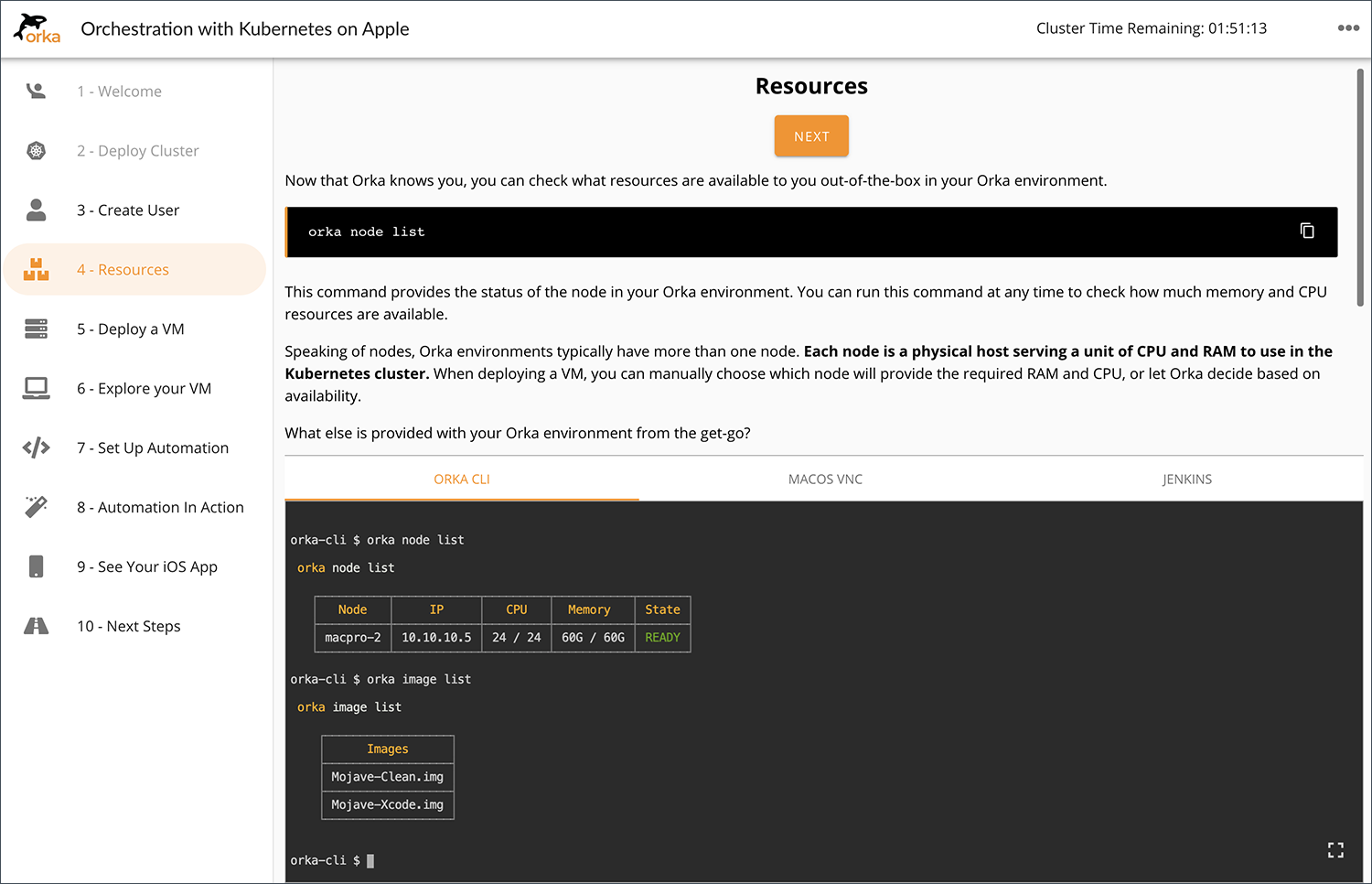
Orka is MacStadium’s new virtualization platform based on standard cloud orchestration tools like Docker and Kubernetes but built specifically for Apple hardware. That means a reliable, software-driven, and high-performance experience for devs testing iOS and Mac apps that require a large pool of Macs to run CI-driven development.
“Everyone who has to deal with macOS automation would love a Google Cloud or AWS for macOS,” said Mike McQuaid of Homebrew. “I feel like Orka is the closest thing that you can get to that. You’re able to, spin up, spin down VMs using an easy-to-use CLI or API.”
Orka clouds can be built on Mac Pros or on the latest T2 Mac minis and come with plugins for CI tools including Jenkins, GitHub, GitLab, Buildkite, and TeamCity.
You can try an Orka demo now, including a two-hour Orka playground environment for free at tryorka.com.
HP ENVY 13 Intel 10th Gen Core i7-1065G7 Quad-core 13.3″ 4K Touch Laptop with 512GB SSD for $699.99 at Best Buy (list price $999.99)
Dell New XPS 13 9300 Intel 10th Gen Core i5-1035G1 Quad-core 13.3″ 1920×1200 Laptop for $944.99 at Dell (use code: SAVE10 – list price $1099.99)
Dell New Vostro 15 7500 Intel 10th Gen Core i5-10300H Quad-core 15.6″ 1080p Laptop for $764.09 at Dell (use code: STAND4SMALL – list price $1498.57)
Dell Inspiron 15 5000 Intel 10th Gen Core i7-1065G7 Quad-core 15.6″ 1080p Laptop with 512GB SSD for $674.99 at Dell (use code: STAND4SMALL – list price $799.99)
Dell Vostro 13 5000 Intel 10th Gen Core i7-10510U Quad-core 13.3″ 1080p Laptop for $899.09 at Dell (use code: STAND4SMALL – list price $1427.14)
Dell Latitude 15 3500 Intel Core i3-8145U 15.6″ 1080p Win10 Pro Laptop for $498.84 at Dell (use code: STAND4SMALL – list price $1034.85)
Alienware m15 R2 Intel Core i7-9750H 6-core 15.6″ 1080p Gaming Laptop with RTX 2070, 512GB SSD for $1619.99 at Dell (use code: SAVE10 – list price $2113.98)
Alienware m17 R1 Intel Core i7-9750H 6-core 17.3″ 1080p Gaming Laptop with RTX 2070 Max-Q, 16GB RAM, 256GB SSD + 1TB HDD for $1607.39 at Dell (use code: SAVE10 – list price $2044.99)
Dell G7 15 Intel Core i7-9750H 6-core 15.6″ 4K OLED Gaming Laptop with RTX 2080 Max-Q, 16GB RAM, 512GB SSD for $1799.99 at Dell (list price $2784.98)
Lenovo ThinkPad X390 Intel Core i5-10210U Quad-core 13.3″ 1080p IPS Laptop for $749 at Lenovo (use code: SECRETDEAL – list price $1369)
Lenovo ThinkPad X280 Intel Core i5-8350U Quad-core 12.5″ 1080p Touch Laptop for $769 at Lenovo (use code: CLEARMORE – list price $2079)
Lenovo ThinkPad T490 Intel Core i5-10210U Quad-core 14″ 1080p IPS Laptop for $999.99 at Lenovo (use code: WEBSPECIAL – list price $1469)
Lenovo ThinkPad X1 Carbon Gen 7 Intel Core i5-10210U Quad-core 14″ 1080p Laptop for $999.99 at Lenovo (use code: CLEARMORE – list price $2629)
HP Pavilion 15z Touch AMD Ryzen 5 3500U Quad-core 15.6″ Laptop for $559.99 (+$60 for 1080p Display) at HP (list price $679.99)
HP 15t Intel Core i7-10510U Quad-core 15.6″ Laptop for $599.99 (+$50 for 1080p Display) at HP (list price $799.99)
HP Pavilion 15t Intel 10th Gen Core i7-1065G7 Quad-core 15.6″ Laptop with 16GB RAM, 512GB SSD for $779.99 (+$130 for 1080p Touch Display) at HP (list price $1129.99)
HP ENVY x360 Intel Core i5-1035G1 Quad-core 15.6″ 1080p Touch Laptop for $799.99 at HP (list price $849.99)
HP Pavilion x360 15t Touch Intel Core i7-10510U Quad-core 15.6″ 1080p Touch Laptop with 16GB RAM, 512GB SSD for $929.99 at HP (list price $1249.99)
HP OMEN 15 Intel Core i7-9750H 6-core 15.6″ 1080p 144Hz Gaming Laptop with RTX 2070, 16GB RAM for $1286.99 at HP (Select “Core i7 9750H + NVIDIA RTX 2070” (+$160) and “15.6” 144Hz IPS 1080p Display” (+$70) and use code: 10GAMERSPRING – list price $1669.99)
ASUS VivoBook 15 AMD Ryzen 3 3200U Quad-Core 15.6″ 1080p Laptop for $299 at Walmart (list price $349)
ASUS VivoBook 17 AMD Ryzen 7 3700U 17.3″ 1080p Laptop with Radeon RX Vega 10, 12GB RAM, 512GB SSD for $549.99 at Best Buy (list price $599.99)
ASUS TUF A15 AMD Ryzen 7 4800H 8-Core 15.6″ 1080p Gaming Laptop with RTX 2060, 512GB SSD for $899.99 at Best Buy (list price $999.99)
ASUS ROG Zephyrus G14 AMD Ryzen 9 4900HS 14″ 1080p Laptop with RTX 2060 Max-Q, 16GB RAM, 1TB SSD for $1349.99 at Best Buy (list price $1449.99)
Razer Blade 15 Intel Core i7-9750H 6-core 15.6″ 1080p 144Hz Gaming Laptop with GTX 1660 Ti, 16GB RAM for $1099.99 at Amazon (list price $1599.99)
Ultimate Ears MEGABOOM Bluetooth Wireless Speaker for $74.99 at Dell (list price $249.99)
Sony WF-SP700N Wireless Noise Cancelling Sport Earbuds for $90.99 at Amazon (list price $179.99)
Klipsch T5 True Wireless Earphones for $89.99 at Amazon (list price $199.95)
TaoTronics TT-BH090 Hybrid Active Noise Cancelling Over-Ear Wireless Headphones for $39.99 at Amazon (Clip $10 Coupon and use code: AEDZL2QY – list price $69.99)
If you’ve never heard of neumorphism, you’re not alone.
One of the visual changes in macOS Big Sur to have attracted a lot of comment is what some have suggested is a partial return to skeuomorphism: icons designed to look like real-world objects. It is, some have argued, Apple coming full circle: from 3D to flat and now back to 3D.
But Jack Koloskus, lead designer for Input and The Outline, says that Apple is moving forwards, not backward…
In an interesting piece, Koloskus says that what Apple is doing in the upcoming version of macOS is not skeuomorphism, but rather ‘the next wave’ in UI design: neumorphism.
macOS 11 (known as Big Sur) boasts loads of new features that bring it closer to parity with its iOS counterparts on iPhones and iPads, but one area where there seems to be a divergent path is… its icon and user interface design. You can blame that on a little something called Neumorphism, and like or hate it, it’s the next wave in UI design […]
When you boil it down, neumorphism is a focus on how light moves in three-dimensional space. Its predecessor, skeumorphism, created realism in digital interfaces by simulating textures on surfaces like felt on a poker table or the brushed metal of a tape recorder. An ancillary — though under-developed — aspect of this design style was lighting that interacted realistically with the materials that were being represented; this is why shadows and darkness were so prevalent in those early interfaces.
But the lighting and texture simulations being done for those designs were still relatively simple: which objects are shiny and which are rough? Which objects are transparent and which opaque? These were ultimately utilitarian and somewhat arbitrary choices. What sets neumorphism apart from its progenitor is that the focus is on the light itself and how it interacts with a variety of objects in a purely digital space. The light simulations in neumorphism are more complex, and are focused on how light from one object could affect another, or the function of the object itself.
There are, he suggests, two key differences between skeuomorphism and neumorphism.
First, neumorphic elements don’t have to represent real-world objects. They are simply three-dimensional shapes which can have arbitrary designs.
Second, while a skeuomorphic icon exists in isolation – the shadow patterns might vary from its neighbouring icons – neumorphism is all about a consistent light pattern across the entire screen. If the light is coming from top left for one icon, it must be coming from top left for all the other icons on the screen.
Some criticize change for change’s sake, but Koloskus disagrees.
There is one undeniable feature to neumorphism that makes it so appealing. It looks new. Flat design’s core “digitally native” look, and its implementation of ideas like stacks, pages, and layers have become familiar to the point of ubiquity over the last 8+ years. Neumorphism is far enough away from what users have become accustomed to that it genuinely does feel like a new language. That differentiation is valuable, especially to a company like Apple trying to move its operating system to a new numbered version for the first time in 19 years.
Personally, I’m with him on this. I do generally like change to have a purpose, and I am a minimalist who was a great enthusiast of flat design back in 2017, but I’m bored with it now. It’s time for a change.
Not all designers have been impressed by what we see in the macOS Big Sur beta, however. Koloskus says that’s partly just the shock of the new. It’s human nature to dislike change until we have a chance to get used to it. And it’s partly that Apple has to deal with usability as well as aesthetic appeal.
So why does Apple’s take on it look… kinda bad? As mentioned earlier, the conceptual framework of neumorphism is relatively new, and there has been a resistance to it in much of the design world. UI design has been plagued for the longest time by designers who love to create hypothetical designs untethered to actual usability or user experience needs as a purely formal exercise, and this has led to infighting […]
Experimentation with form will always be difficult to balance with usability in the field of interface design, but it doesn’t mean it should be dismissed outright.
Apple is still feeling its way with this new design language.